

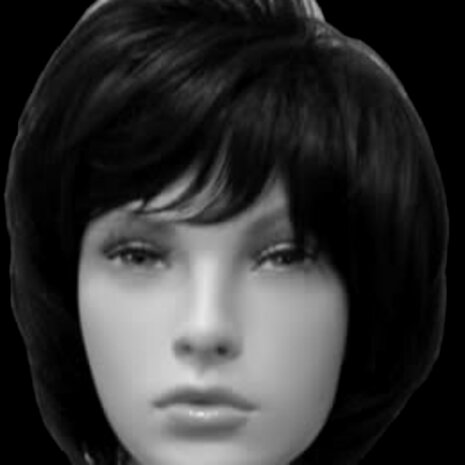

A wig for one big day and a wig for daily life are not the same purchase. One has to look flawless under close-up photos and camera flash. The other has to survive five, six, seven wear days a week without falling apart or wearing you out.
Mixing up the two is a common regret. Here is how to tell which one you need.
The usual problem. You buy one wig and ask it to do everything: the wedding, the office, the school run. The features that photograph best are the ones that wear out fastest under daily handling. Months later the wig looks tired, and it feels like you chose badly when really it was doing two jobs.
Start with one question: how often will it touch your head?
A wedding, a gala, a photoshoot: that is one wear, maybe two if there is a rehearsal. An everyday wig gets put on and taken off hundreds of times a year.
That single difference changes almost every other decision: the hair type, the cap, the density, even how you store it.
What a special-occasion wig needs to get right
Occasion wear lives or dies on close inspection. Guests stand near you. Cameras zoom in. The hairline has to read as real under bright lights, not just from across a room.
For this reason, a lace front or full lace cap matters more here than for daily wear. Lace lets the base disappear against the skin at the hairline, so a side part or a swept-back style does not show a hard edge.
Density and length carry more weight for a one-off event too. An updo needs extra length and volume at the crown to hold its shape through hours of standing, dancing, and hugging. A style that looks fine sitting at a desk can go flat fast under those conditions.
Because it is worn once, all-day comfort matters less than how it photographs. Heat styling to match a specific event look is common, which points buyers toward human hair, since it takes curling and straightening the way natural hair does without reverting or scorching.
What an everyday wig needs to get right
Daily wear flips the priorities. Comfort under a cap worn for eight, ten, twelve hours matters more than how it holds up in one photo.
Breathable cap construction matters here, especially in Singapore’s heat and humidity. A cap that traps heat against the scalp gets uncomfortable fast, and that discomfort is what makes people stop wearing a wig they otherwise like.
Lower-maintenance fiber choices also make sense for daily rotation. A good synthetic holds its set through washing and normal wear without needing to be restyled each time, which matters when you are putting a wig on every morning and do not have an hour to spend on it.
Durability over many wears and washes counts more than how the hairline reads under studio lighting. A cap built for repeated handling, and hair that survives repeat washing without matting, outlasts one chosen only for how it photographs.
Lace front or standard wig cap: match it to the use
Lace front: best for occasion wear, updos, and any style that shows the hairline. It needs more careful handling, and real lace needs more careful washing.
Standard wig cap: best for everyday wear. Faster to put on, generally more breathable across the whole cap rather than just the front, and built to take repeated handling.
Some buyers keep one of each: one for the calendar’s big days, one in daily rotation. That split is common and often more practical than trying to make a single wig do both jobs well.
Human hair or synthetic: when each makes sense
Human hair styles like natural hair. It takes heat, holds curl and straightening, and can be restyled between wears. That flexibility suits occasion wear, where the look might change from event to event, and it suits anyone who wants to switch styles often.
Synthetic fiber comes pre-styled and holds that style through washing without needing heat tools. That is an advantage for daily wear, where reliability morning after morning matters more than the ability to change the look.
Neither is the better wig overall. Each is better for a different pattern of use.
Can one wig do both jobs?
Sometimes, if you pick toward the occasion side and treat it gently on ordinary days. A human hair lace front can handle a wedding and a normal week, but it needs more upkeep than a wig chosen purely for daily wear, and it wears down faster if it becomes the only piece worn daily for months.
Buyers who want a genuine daily-and-occasion crossover usually get more value from two lighter-duty wigs than one wig asked to do everything. The features that matter for photos are often the same features that wear out fastest under daily handling.
Tell us the job, not just the style
The most useful thing to tell us is not the color or the length. It is the job: is this for one event, or every weekday? How many hours will it sit on your head at a time? Is there an updo involved? Do you need to restyle it between wears?
Answer those questions and the right cap, hair type, and density follow from there.
One wig for the big day, one for every day
Tell us the job and we will point you to the right piece. Or start browsing here.